Illegal sale of electronic cigarettes worth 5 million UAH: Three suspects to stand trial in Poltava
Three individuals will stand trial in Poltava for the illegal sale of excisable goods. As established by detectives from the Territorial Office of the ESBU in the Poltava region, the suspects organized the sale of electronic cigarettes, e-liquids, and components for their production through a network of 14 retail pavilions. During searches, products valued at approximately 5 million UAH were seized.
According to the investigation, the goods were purchased in bulk and delivered from another city via courier services. Afterward, the electronic cigarettes and their components were distributed among the retail outlets.
The products were sold without the required licensing and permit documentation, excise tax stamps, or fiscal receipts.
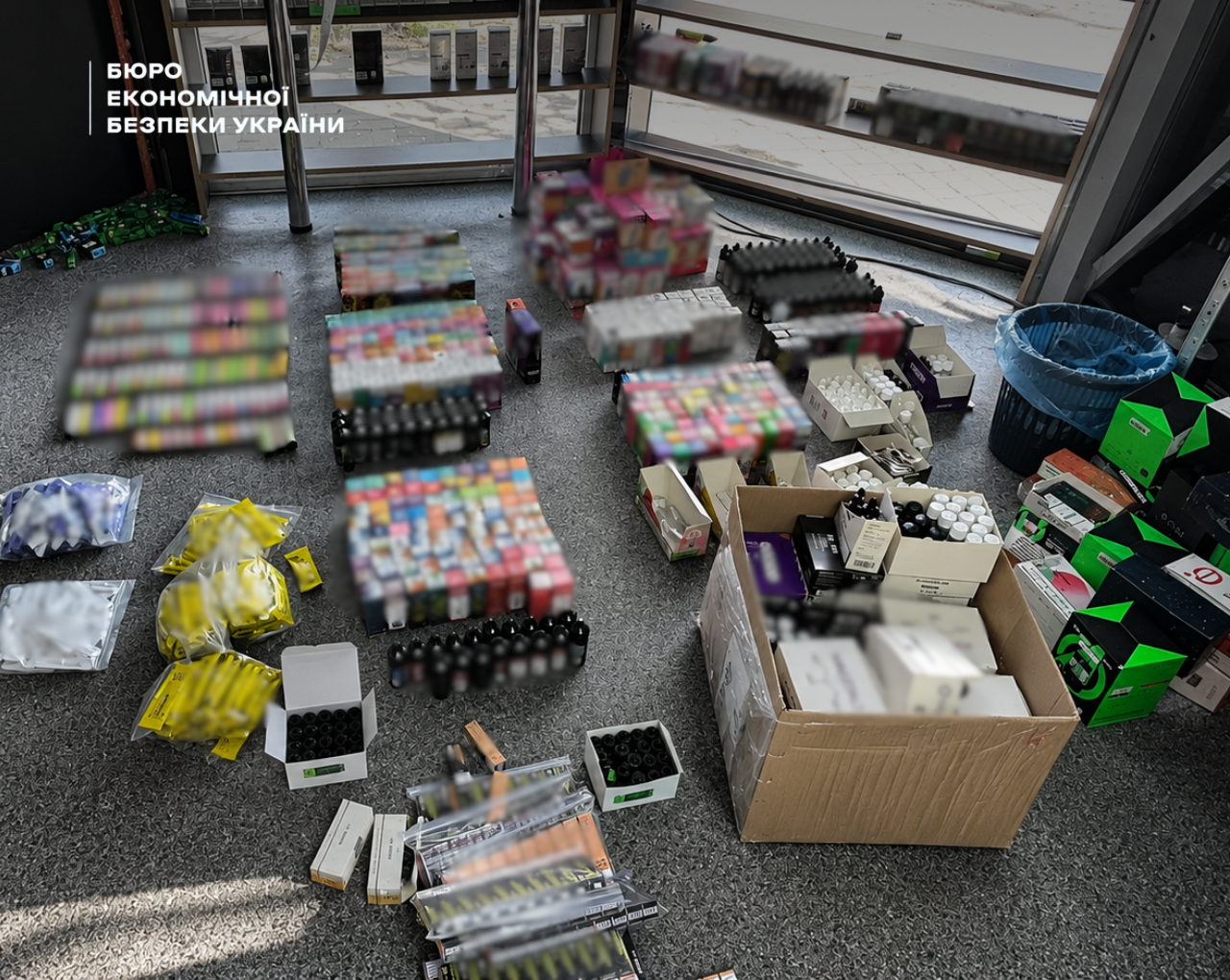
During authorized searches at the retail pavilions and storage facilities, ESBU detectives in the Poltava region seized nearly 1,200 disposable electronic cigarettes. Among other items, they seized over 1,300 bottles of ready-made e-liquids, around 400 sets of e-cigarette components, and nearly 30,000 bottles of ingredients for making e-liquids, including glycerin, nicotine boosters, and flavorings. Cash and mobile phones were also seized.
The total value of the products removed from illegal circulation is approximately 5 million UAH.
The suspects are charged with the illegal storage and sale of excisable goods, committed by a group of persons upon prior conspiracy under Part 2 of Article 28 and Part 1 of Article 204 of the Criminal Code of Ukraine.
The pre-trial investigation has been completed. The indictment has been forwarded to the court.

Furthermore, the suspects in the case transferred 300,000 UAH as a voluntary contribution to support the Armed Forces of Ukraine.
Operational support is provided by personnel from the Strategic Investigations Department in the Poltava Region of the SID of the National Police of Ukraine. Prosecutorial guidance is provided by the Poltava Regional Prosecutor's Office.
Pursuant to Article 62 of the Constitution of Ukraine, a person is presumed innocent of committing a crime and cannot be subjected to criminal punishment until their guilt is proven through legal procedures and established by a court's verdict of conviction.
