De-shadowing of markets and protection of legal business: ESBU discusses joint steps with entrepreneurs
The Economic Security Bureau of Ukraine discussed steps to de-shadow the economy and protect legitimate enterprises with representatives of businesses and law enforcement agencies. At the meeting in Kyiv, the ESBU was represented by Deputy Director Yurii Bielousov. Topics of discussion included investment protection and reducing unjustified pressure on business.
Speaking about the de-shadowing of the economy, Yurii Bielousov noted that the Bureau's priority is investigating schemes that cause the largest losses to the budget. He highlighted efforts to counter the illegal circulation of fuel, the exposure of conversion centers with an annual turnover of 23 billion UAH, and the shutdown of clandestine tobacco manufacturing facilities.
One of the Bureau's areas of work is analyzing markets where shadow schemes are prevalent. This helps identify regulatory gaps that allow entities to evade taxes or operate outside the legal market. As Yurii Bielousov pointed out, in such cases, changing the rules can significantly impact an industry's operations without the need to open criminal proceedings.
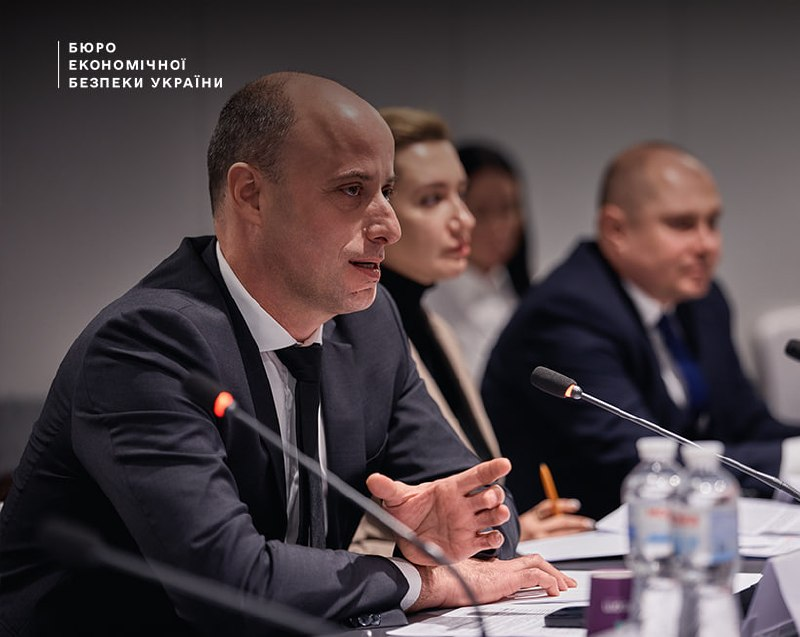
The discussion also addressed the possibility of introducing a mechanism allowing an enterprise to pay off its tax debt and fine prior to being served a notice of suspicion. Yurii Bielousov supported this proposal, stating that such an approach would ensure revenues to the budget while enabling businesses to continue their legitimate operations.
Representatives of industry associations shared data on how shadow schemes operate within their sectors. Specifically, discussions covered the illegal circulation of electronic cigarettes, the use of bank accounts belonging to front persons (money mules) for payments in illegal online casinos, and undeclared employment in the security industry. Representatives of the security business handed over analytical materials to law enforcement containing a methodology for identifying companies with an elevated risk of violations.
President of the Ukrainian Oil & Gas Association Yaroslav Starovoitenko commended the ESBU's results in de-shadowing the retail fuel market. He emphasized that holding a fuel trading license does not in itself guarantee compliance with tax legislation, making it essential to continue working jointly with the State Tax Service.
Separately, the participants discussed the timelines of pre-trial investigations, the conduct of urgent searches, and the impact of asset seizures on the operations of enterprises. Business Ombudsman Anka Feldhusen drew attention to the fact that a company's prolonged involvement in criminal proceedings can affect its reputation and access to financing. The Office of the Prosecutor General reported that it has initiated an audit of criminal proceedings, particularly cases that have been pending before the courts for years.
Following the meeting, the participants agreed to establish an interagency working group that will promptly respond to issues reported by businesses. For their part, industry associations will provide analytical materials to identify shadow schemes in their respective markets.
The meeting was organized by the Office of the Prosecutor General, the Ukrainian Business Council, the American Chamber of Commerce in Ukraine, and the European Business Association.
